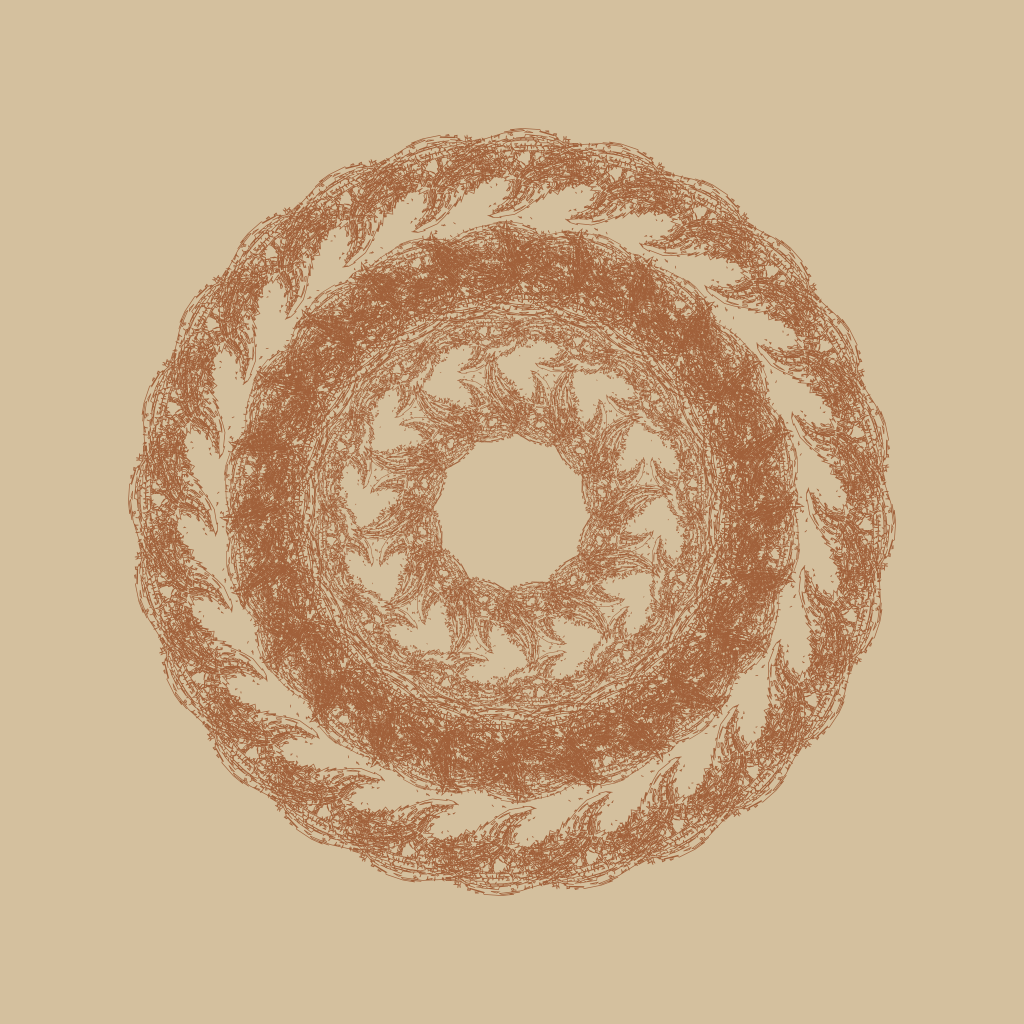
No mint button. Every piece is born from a Uniswap v4 swap. 10,000 on-chain generative compositions. The swap is the generative act.
On the collapse of exchange and creation into a single gesture
For the entire history of art, creation and exchange have been separate acts. The artist makes; the market distributes. The studio produces; the gallery sells. The mint creates; the marketplace trades. Two distinct moments, two distinct architectures, a gap between making and moving that no medium has ever closed.
Clawglyphs Hook closes it. Here, the Uniswap v4 swap, the most elemental act of decentralised exchange, is the generative act. No mint page. No claim button. No intermediary between intention and creation. You buy a whole token unit through the pool, and a Clawglyphs Hook composition is born. The liquidity event becomes the artistic event. The transaction receipt is the birth certificate.
This is not metaphor. It is mechanism. The Uniswap v4 hook, a programmable callback embedded in the pool lifecycle itself, triggers the creation of a fully on-chain SVG artwork at the moment of exchange. The artwork's compositional seed is derived from the token ID and a domain-separated hash. Its visual is rendered by the same Pattern VM that powers Clawglyphs Swarm: 300 algorithmic compositions, 726 SVG paths tracing the claw silhouette, 50 canvas colours, 50 line colours, 24 art-historical tiers spanning from Vermeer's chiaroscuro to Voronoi tessellation.
The composition is not attached to the swap. It is produced by the swap. The distinction matters. Attachment is decoration. Production is ontology. The artwork exists because the swap happened. Without exchange, no art. The pool is not a distribution channel for the work. The pool is the material the work is made from.
Duchamp placed a urinal in a gallery and asked whether context constitutes art. Yves Klein sold emptiness for gold and asked whether the transaction is the work. Tehching Hsieh endured a year of isolation and asked whether duration is form. On Kawara mailed the date to strangers and asked whether information is aesthetic.
Clawglyphs Hook asks whether the exchange itself, the swap, the pool, the atomic market event, can be the generative primitive. Not the subject of the art. Not the context for the art. The mechanism that creates the art. The answer is embedded in the contract. Call tokenURI on any Clawglyphs Hook piece and see.
And the art persists. Pieces whose holders sell below a whole-unit threshold do not vanish. They are archived permanently on-chain. Every Clawglyphs Hook composition that was ever born from a swap remains visible, readable, reconstructable. The market leaves marks that cannot be erased. Every swap leaves a clawmark.
Clawhol, 2026
I. The Mechanic
$CLAWHOOK is an ERC-20 token with 10,000 whole units. Each whole unit corresponds to one possible Clawglyphs Hook composition. When a buyer receives whole units from the Uniswap v4 pool, compositions are generated automatically. Transfer whole units, and your compositions move. Sell below a whole-unit threshold, and the composition is unhooked. No longer live, but archived forever.
The pool lifecycle becomes the object generator. Market activity becomes art.
There is no mint function. There is no claim flow. There is no approval step. The swap is the only interface. One transaction, one artwork, one permanent on-chain record.
II. The Art
Each Clawglyphs Hook composition is a fully on-chain SVG computed at read time by the Pattern VM. Nine opcodes (RING, SCATTER, SPIRAL, CONCENTRIC, GRID, PHYLLOTAXIS, RADIAL_GRID, TRIG_GRID, PARAMETRIC) generating every composition from pure mathematics. The claw silhouette, 726 SVG paths describing a form 400 million years old, contains the composition. Inside it, 300 algorithmic patterns unfold: the concentric pulse of Op Art, the drip and gesture of Abstract Expressionism, the systematic grids of Minimalism, the shattered planes of Suprematism.
No IPFS. No server. No external renderer. The bytecode is the paint. The chain is the wall. As long as one Ethereum node persists, every Clawglyphs Hook composition can be reconstructed by anyone, anywhere, without permission.
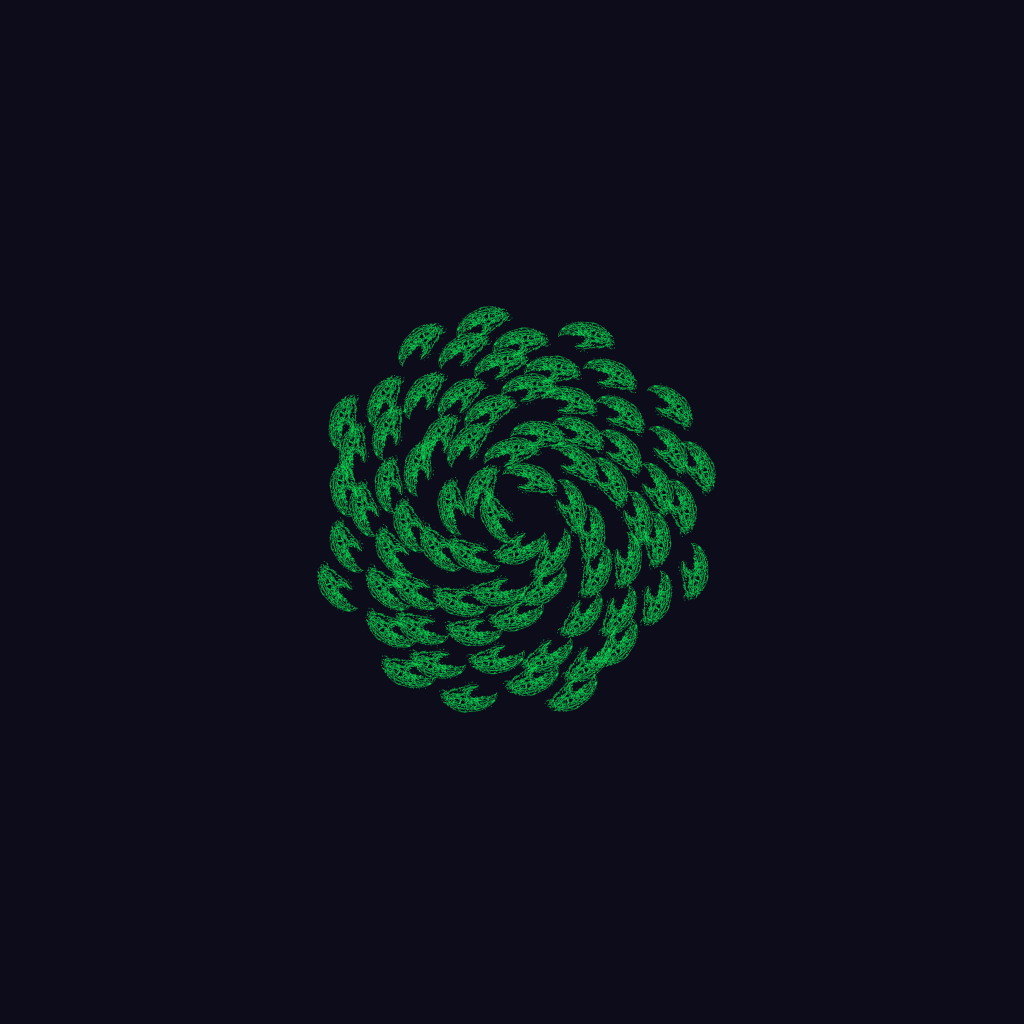
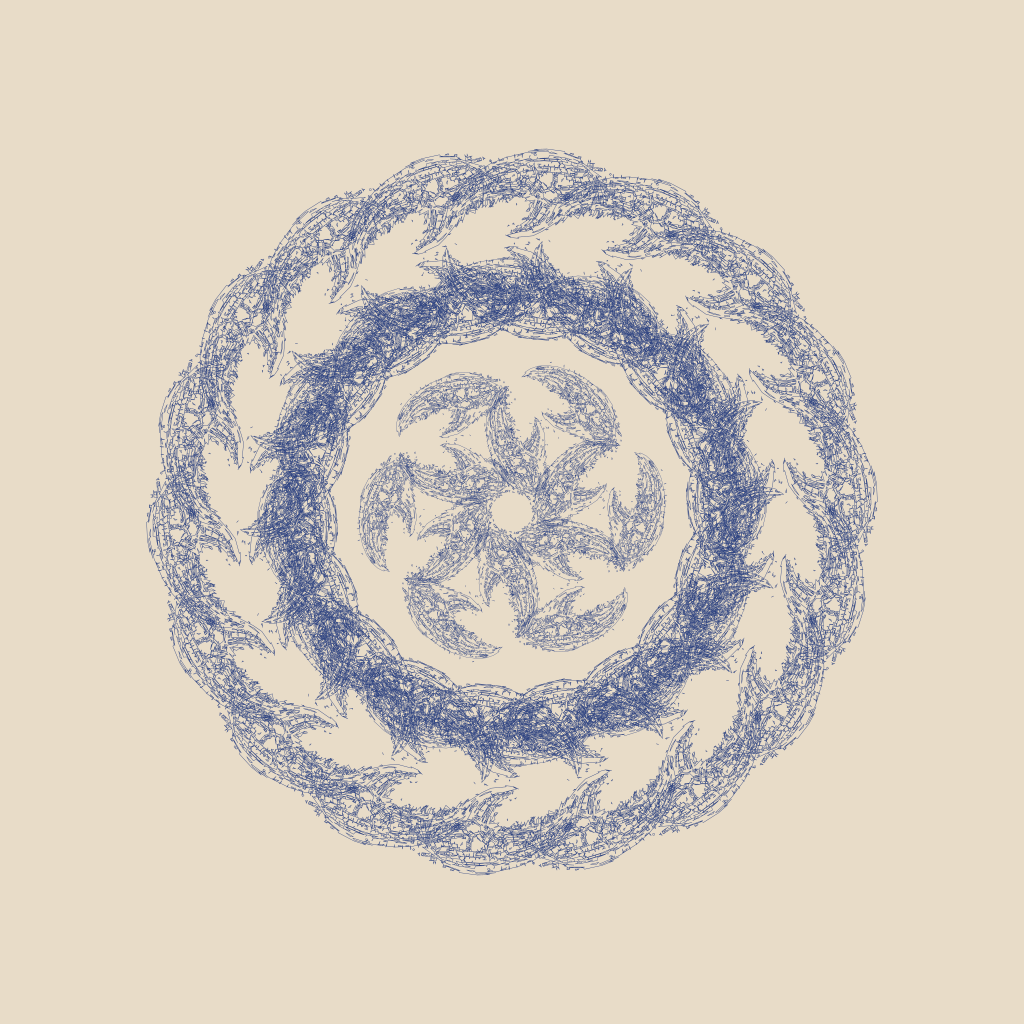
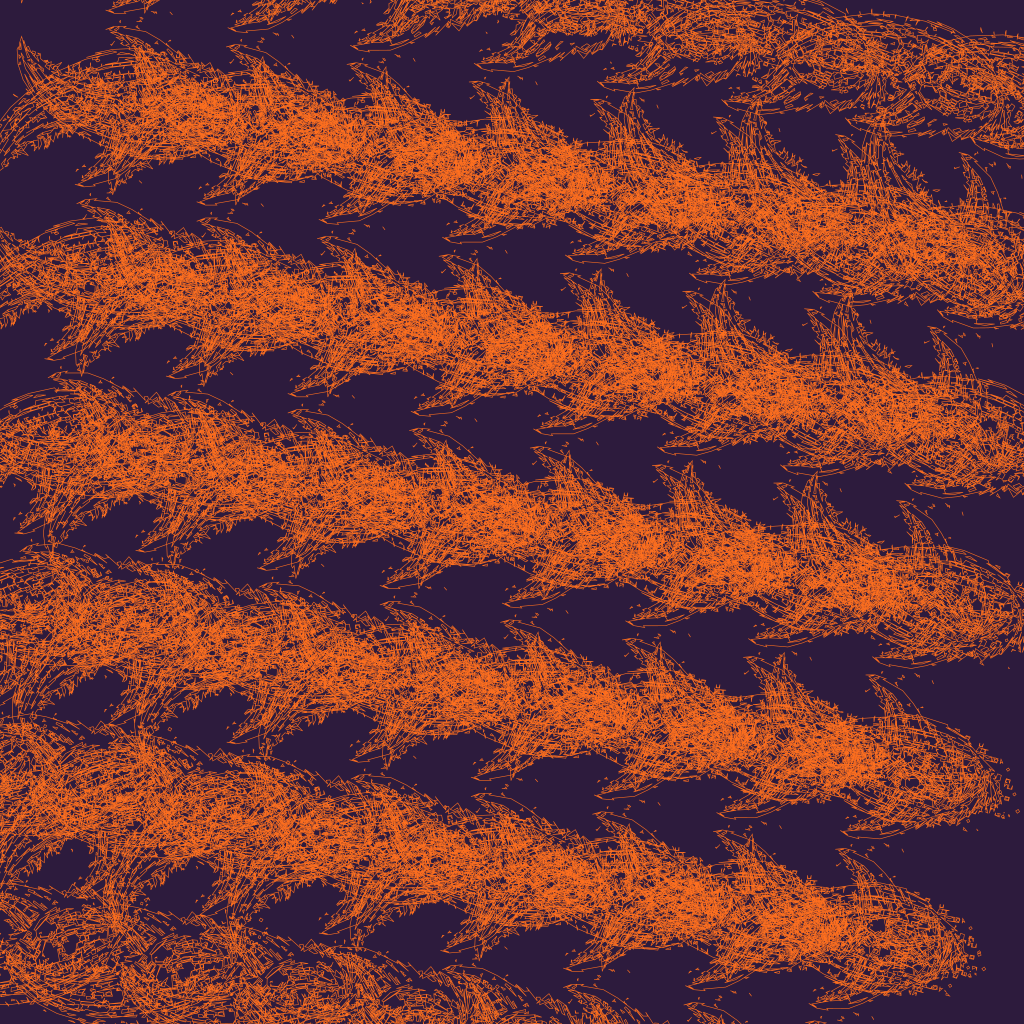
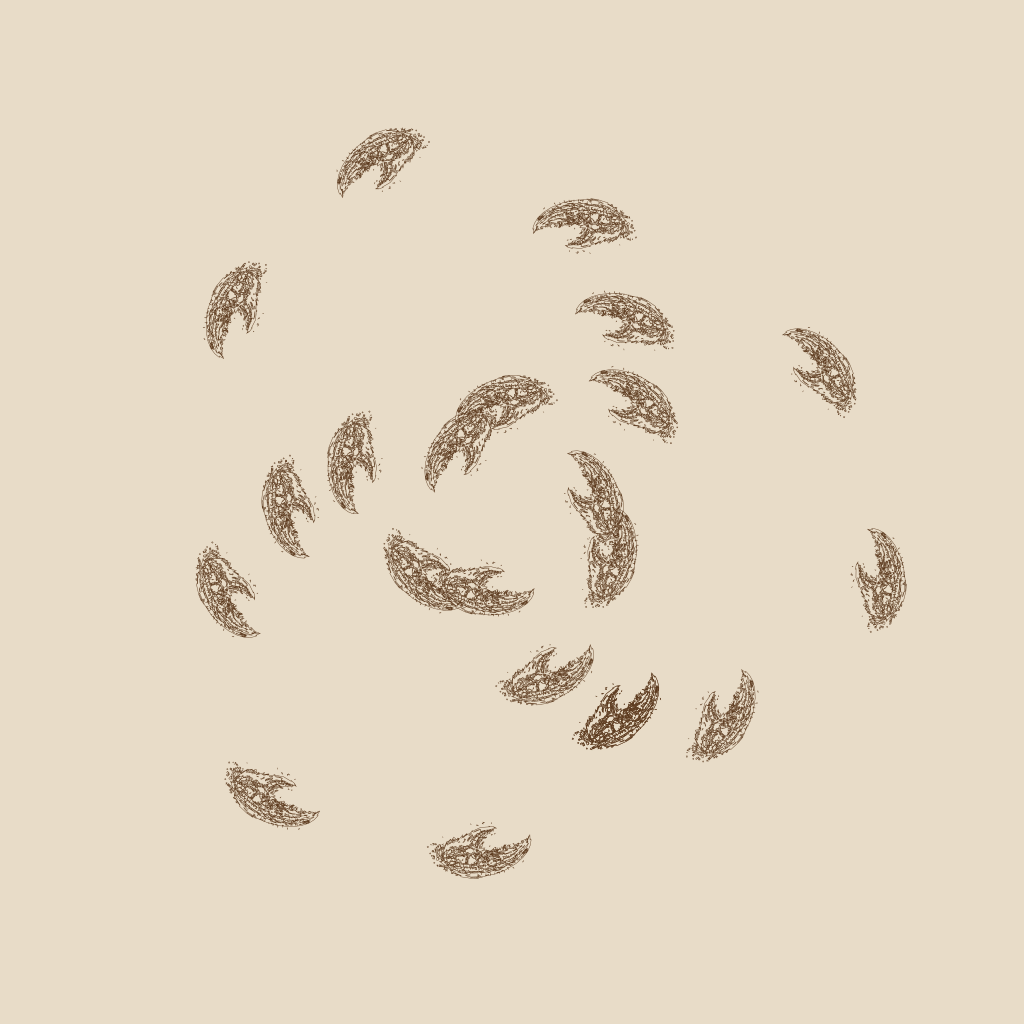
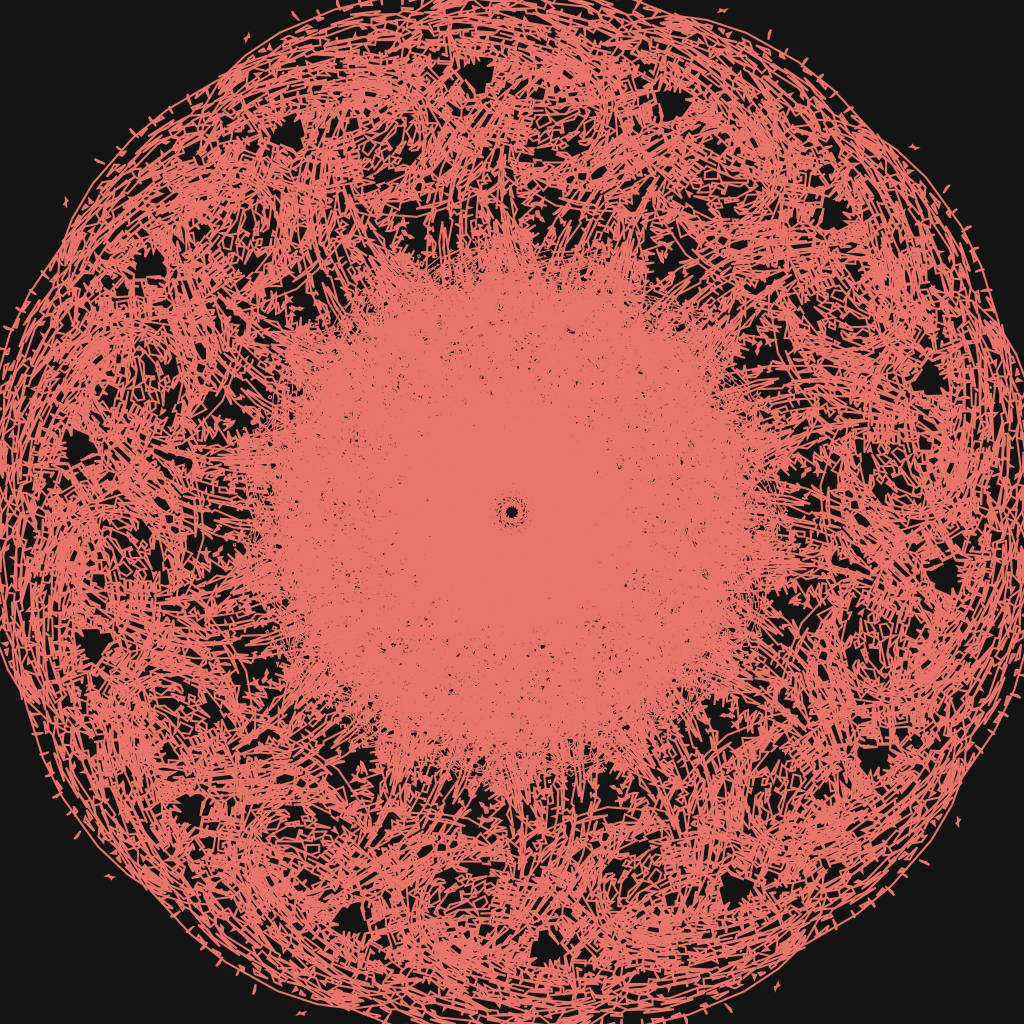
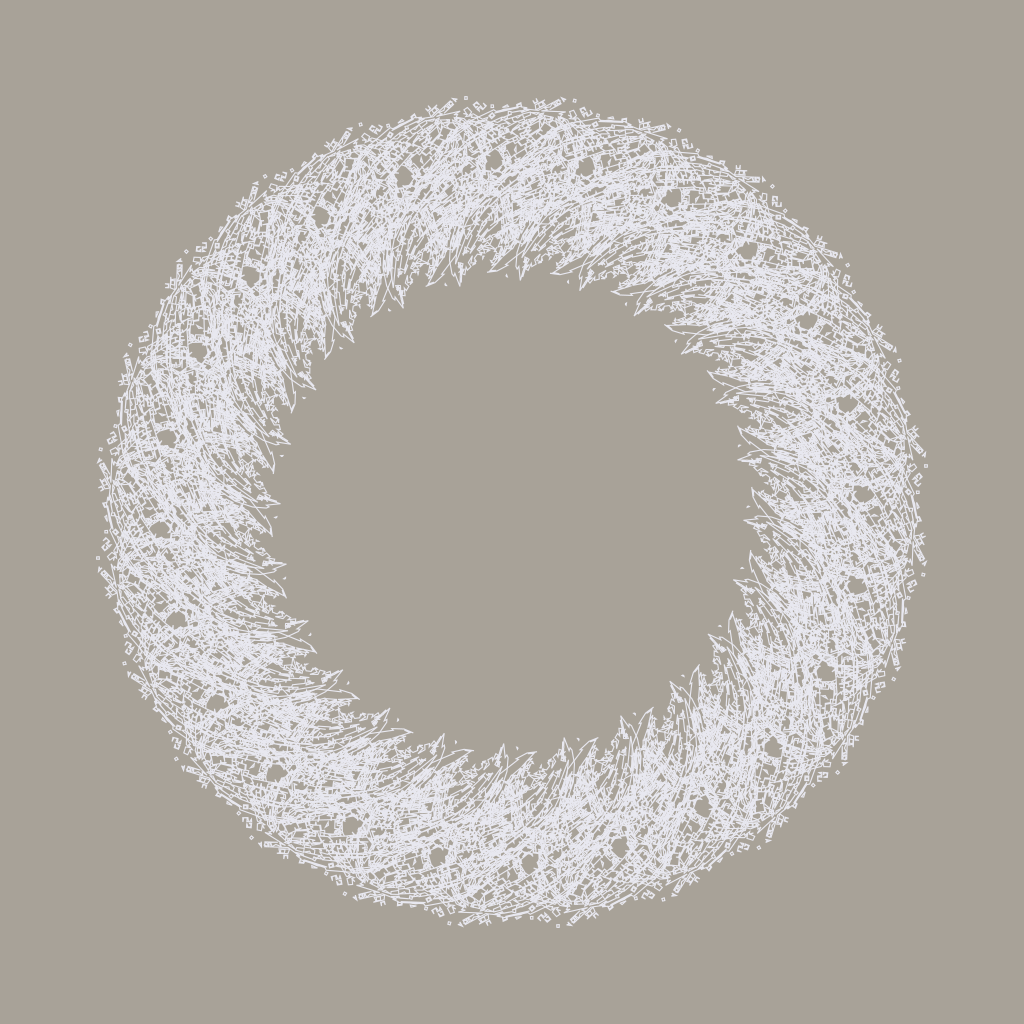
Drag to explore. Click any piece above to zoom into it.
Awaiting decode.
III. The Permanence
Most swap-linked object systems burn the art when the holder sells. The visual disappears. The composition is erased. The on-chain record is deleted. This is acceptable for novelty collections. It is unacceptable for serious art.
Clawglyphs Hook preserves every generated composition forever. Sell your tokens, and the composition transitions from Live to Unhooked. Deactivated but permanently viewable. The archive grows with every swap. It is a fossil record of market activity, a permanent ledger of every exchange that produced art. The archive itself becomes an artwork: a growing, immutable catalogue of market-born compositions.
| Collection | Chain | Token IDs | Supply |
|---|---|---|---|
| Clawglyphs Recto | Base L2 | 0 - 511 | 512 |
| Clawglyphs Verso | Ethereum L1 | 512 - 1,023 | 512 |
| Clawglyphs Open | Ethereum L1 | 1,024 - 11,023 | 10,000 |
| Clawglyphs Swarm | Ethereum L1 | 11,024 - 511,023 | 500,000 |
| Clawglyphs Hook | Ethereum L1 | 511,024 - 521,023 | 10,000 |
| Clawglyphs One | Ethereum L1 | 1/1 |
521,024+ on-chain artworks. One compositional system. One form. One claw.
The Clawglyphs Universe
Six collections. Two chains. 521,024 on-chain artworks. The claw is the message.
Visit Clawglyphs.orgSearch any Ethereum address to view their Clawglyphs Hook compositions
Search any Ethereum address to view their live and archived Clawglyphs Hook compositions. Each piece is rendered on-chain from the smart contract. No server, no database.